Darwin Joston’s career beyond Assault on Precinct 13 included television guest appearances, supporting roles for David Lynch and John Carpenter, an independent short for Eric Red, and years of work on film transportation crews. Napoleon Wilson remains his defining character, but that performance represents only one part of his screen career.
The other credits need a little sorting. An appearance in Eraserhead is not another leading role, and a credit on Wild at Heart does not mean Joston appears in front of the camera. His career moved between different kinds of work, sometimes within the same period.
For his casting and performance as Wilson, see our Darwin Joston profile. Here, the focus is his other films, television work and production credits, with a distinction between substantial acting parts, brief appearances and work behind the scenes.
Television Before Assault on Precinct 13
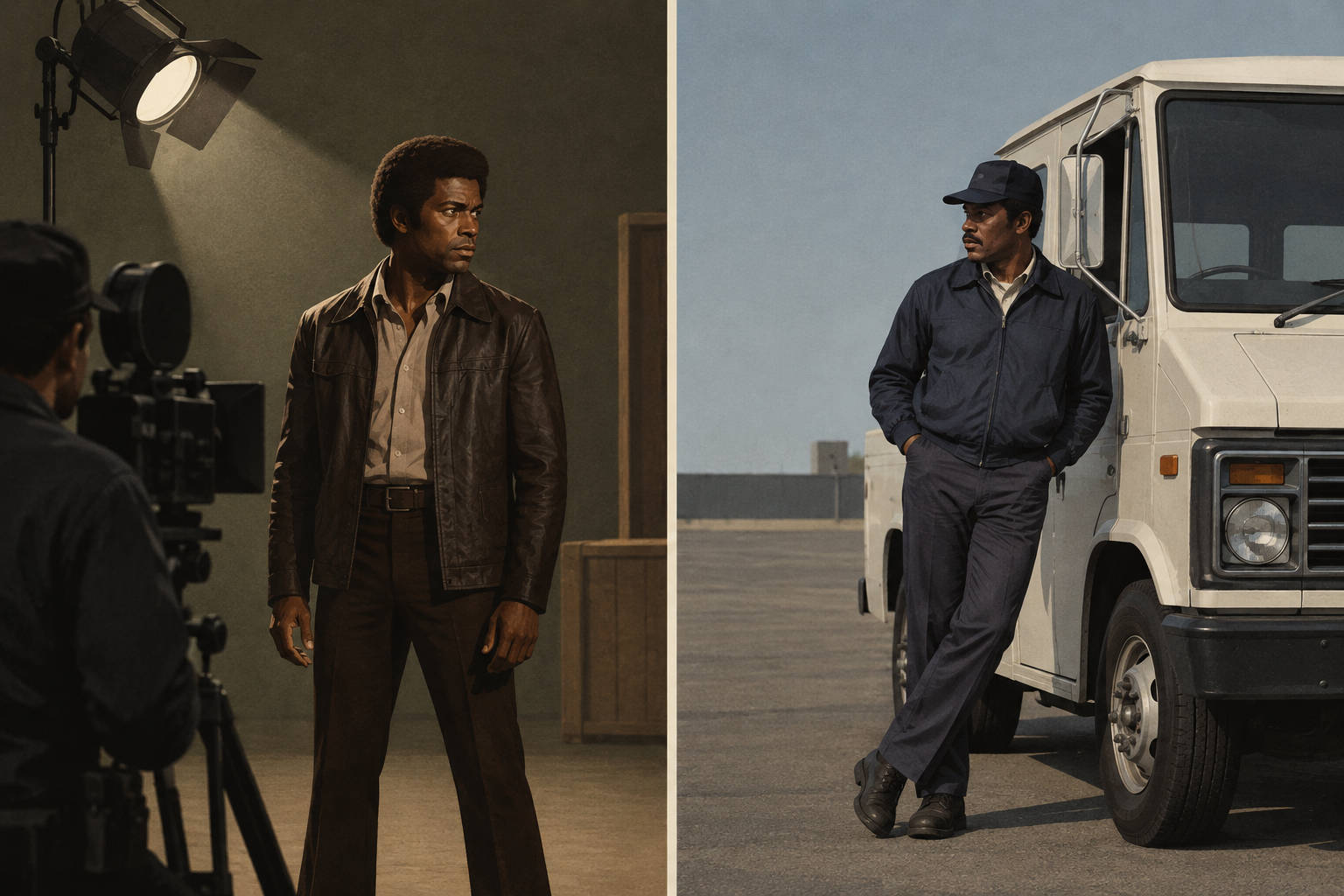
Joston already had television credits before Carpenter cast him. His appearances included Lassie, The Virginian, The Rat Patrol, Ironside, McCloud, The Rookies, Longstreet and Ghost Story. The range is visible in TV Guide’s acting and production credit list, which also records his later television work.
Those titles place him across family adventure, westerns, war stories, police drama and supernatural suspense. They make a useful correction to the idea that he arrived fully formed in Carpenter’s police station. He had already worked within several established television formats.
Guest acting also asks different things of a performer than a feature lead does. A supporting character may need to establish an occupation, an attitude or a threat in very little time. There is rarely room for a long introduction. That provides a useful way to approach Joston’s smaller film parts: look at what the character contributes to the scene, rather than expecting another Napoleon Wilson.
These appearances should not be mistaken for starring runs across every series listed. A television credit identifies a job, not necessarily a major continuing character. For viewers researching his career, that distinction saves both confusion and a considerable amount of episode hunting.
Darwin Joston’s Other Film Roles
His filmography mixes early exploitation cinema, experimental horror, supernatural suspense and a science fiction creature feature. The following selection separates those acting appearances from the transportation work discussed later.
| Film | Period or release year | Role |
|---|---|---|
| Cain’s Cutthroats, also known as Cain’s Way | Early 1970s | Billy Joe |
| Rattlers | 1976 | Palmer |
| Eraserhead | 1977 | Paul |
| The Fog | 1980 | Dr. Phibes |
| Coast to Coast | 1980 | Drunken trucker #2 |
| Gunmen’s Blues | 1981 | The older hitman |
| Time Walker | 1982 | Lieutenant Plummer |
The size of these roles varies considerably. A filmography can make every entry look equally substantial, but a named character may occupy only a brief passage. That matters particularly with Joston, whose best known performance gives viewers good reason to expect more screen time than several of these films offer.
Cain’s Cutthroats: A More Openly Violent Character
In Cain’s Cutthroats, Joston plays Billy Joe, a volatile member of a band of former Confederate soldiers. The revenge western follows their brutal encounter with their former commander and its aftermath. Billy Joe’s instability and cruelty receive particular attention in Once Upon a Time in a Western’s review and cast breakdown.
This is a useful contrast with Wilson. Both characters belong to violent stories, but they occupy very different moral positions. Wilson’s appeal depends partly on the gap between his criminal reputation and his conduct under pressure. Billy Joe offers a much less reassuring presence.
For viewers assessing Joston’s range, the distinction matters more than the shared criminal background. Playing a dangerous man does not always mean playing a charming outlaw. This earlier role places him in harsher material, without the same invitation to enjoy his company.
Rattlers: Another 1976 Genre Credit
Joston also appears as Palmer in Rattlers, a horror and science fiction film released in 1976. It belongs beside Assault on Precinct 13 chronologically, rather than in a list presented entirely as work that followed it.
The role is useful mainly as part of the broader filmography. Anyone choosing a film for a substantial Joston performance should distinguish it from his central work as Wilson. An actor’s name in the credits can be a reason to investigate a film, it is not a promise that the story revolves around him.
Eraserhead: Paul in David Lynch’s Industrial Nightmare
Joston plays Paul in David Lynch’s Eraserhead. The BFI programme notes and full cast credits identify him alongside the film’s pencil machine operator and other figures surrounding Henry Spencer’s strange experiences.
Paul appears in the pencil factory sequence, where a severed head becomes part of an industrial process. His desk work and repeated use of a buzzer place him inside an office routine that continues despite the extraordinary object brought into the building.
The scene offers a sharp change from Carpenter’s siege film. Wilson draws attention through dialogue, attitude and his relationships with the other defenders. Paul belongs to a brief, unsettling transaction. The character does not need an explanation of his past or a speech about the situation.
Read as a performance choice, that ordinariness helps the sequence. A familiar workplace manner sits beside something grotesque, making the process feel more disturbing rather than less. Nobody stops the machinery to explain the nightmare.
Eraserhead is therefore worth watching for the contrast, not for the quantity of Joston’s screen time. It shows how a small supporting part can serve a director’s tone without becoming a miniature version of an actor’s better known character.

The Fog: Returning to John Carpenter
Joston returned to Carpenter’s films as Dr. Phibes in The Fog in 1980. His character appears in the film’s credits reproduced in Silva Screen’s official soundtrack booklet, alongside a cast that includes Adrienne Barbeau, Tom Atkins, Jamie Lee Curtis and Hal Holbrook.
Dr. Phibes is the coroner, placing Joston in a professional role associated with examining the physical evidence of death. It is a smaller assignment than Wilson, and the difference is worth keeping clear. This is a return to Carpenter’s cinema, not a second starring vehicle.
The contrast between the two characters provides the main interest. Wilson enters his story as a prisoner whose conduct challenges expectations. Phibes belongs to the ordinary working life of the town. One character unsettles assumptions about a criminal; the other contributes to a setting in which ordinary explanations are becoming inadequate.
For a viewer following Joston rather than Carpenter, The Fog works best as a companion piece. It places a recognisable performer in a different function and a different kind of suspense. Expect a supporting appearance, not Wilson with a medical qualification.
Gunmen’s Blues: A Role Directly Connected to Wilson
Eric Red’s 1981 short Gunmen’s Blues provides a documented connection between Joston’s performance in Assault on Precinct 13 and a later casting decision. Red chose him to play an ageing hitman because he liked his work in Carpenter’s film. Red describes that decision and the production in his interview about Gunmen’s Blues and his early directing work.
The short centres on a confrontation between the older hitman and a violent young thug in a Hoboken bar. Red shot it in 16 mm over five days, and it later received national television distribution through Night Flight.
For Joston’s career, the casting is more informative than a general claim that filmmakers admired him. Here, a director identified a performance, chose the actor because of it and gave him another armed character whose presence mattered to the central confrontation.
The comparison with Wilson is useful, but it should not erase the new role. An older professional facing a younger challenger creates a different dramatic relationship from prisoners and police trying to survive together. Age, experience and the threat of violence shape the encounter.
Among Joston’s lesser known credits, this short deserves attention because he occupies a central position rather than passing through someone else’s story.
Time Walker: Sharing a Cast with Austin Stoker Again
In Time Walker, Joston plays Lieutenant Plummer, while Austin Stoker plays Dr. Ken Melrose. Their characters are recorded in the AFI catalogue entry for Time Walker. Released in 1982, the film concerns an Egyptian mummy brought to a college campus, where its apparent identity becomes part of a science fiction mystery.
The reunion is an appealing detail for viewers familiar with their earlier film. It does not, however, recreate the Bishop and Wilson partnership. Stoker and Joston occupy different roles within a larger ensemble, and the story gives them different responsibilities.
Our Austin Stoker profile covers his contribution to Carpenter’s film. Here, the shared credit is better treated as another point of contact between their careers than as an unofficial continuation.
Time Walker also helps distinguish Joston’s later acting work from his later production work. It belongs to his feature acting filmography; his continued employment in cinema did not depend entirely on further screen appearances.
Later Television Work
Joston’s television credits continued into the 1980s. He appeared in Hill Street Blues, Knight Rider, Remington Steele and ALF. His IMDb acting credits list the first three appearances in 1985 and his dog pound attendant role in ALF in 1986.
These parts return the career discussion to guest acting rather than feature leads. They also broaden the picture beyond horror and crime cinema. A supporting appearance in a sitcom operates differently from an ominous figure in an independent thriller, even when the same actor supplies both.
For researchers, episode dates deserve care. The year attached to a television series often identifies when the programme began, not when a guest performer appeared. Listing Hill Street Blues as a 1981 series, for example, should not automatically turn Joston’s appearance into a 1981 credit.
The practical approach is to search by actor, character and episode rather than relying on the programme’s headline year.
Film Transportation Work Was Part of His Career
Joston also worked as a driver and transportation captain. His credits include driver on The Buddy Holly Story, transportation captain on Down and Out in Beverly Hills, La Bamba, Back to the Beach and Everybody’s All-American, and driver on Wild at Heart. The distinction between acting and crew employment is preserved in the AFI’s separate acting and production credit categories for Joston.
Those entries change how his later career should be described. Fewer acting appearances do not necessarily mean an absence from film production. They may instead mean that the work appears in another department’s credits.
Wild at Heart is an especially easy title to misread. It connects Joston with another David Lynch production, but the credit is for transportation, not a performance. A combined list of films can conceal that difference unless the job title stays attached.
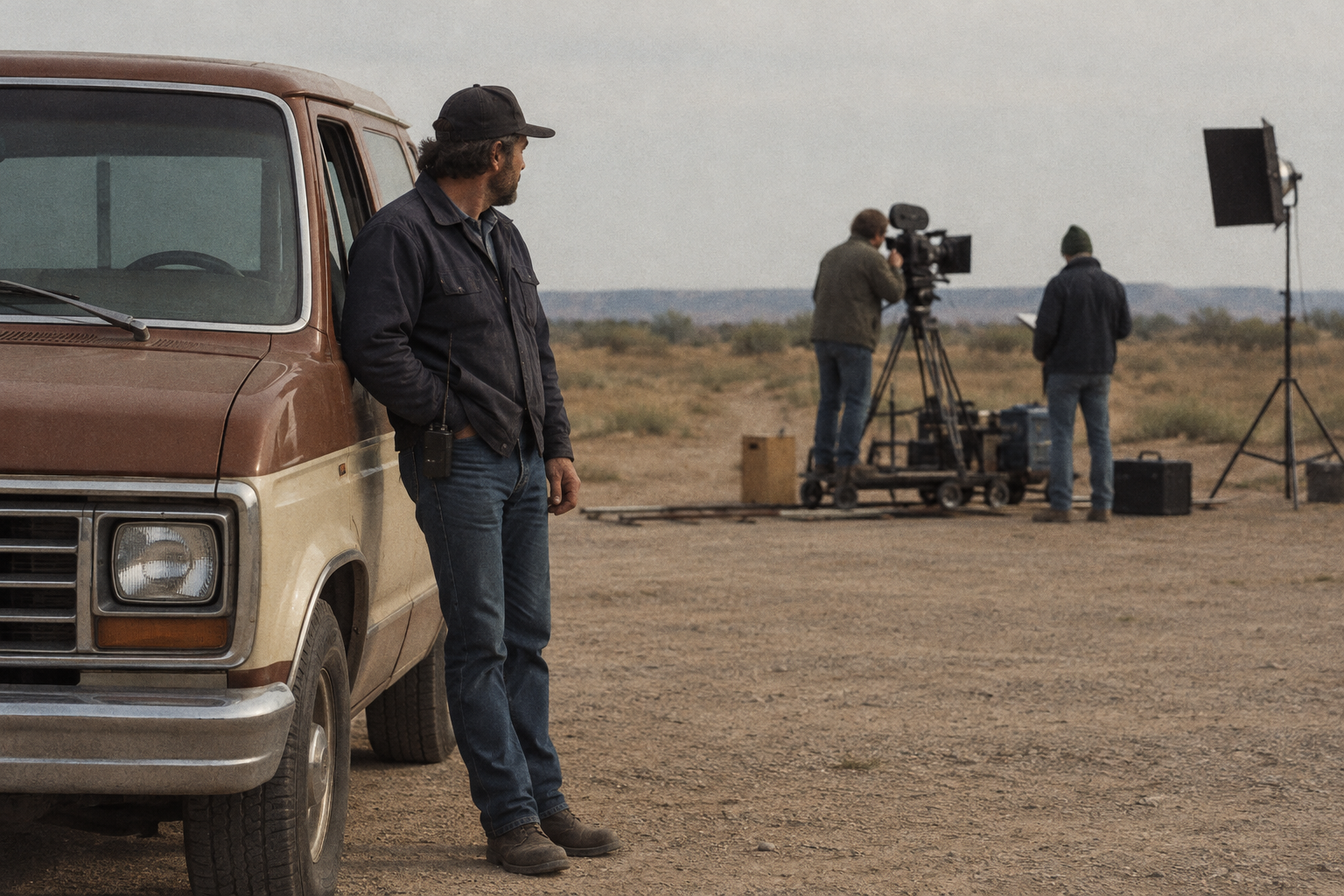
The credits establish what he did, not every reason behind his employment choices. They do not justify an invented story about rejection, dissatisfaction or a deliberate retreat from acting. The firmer account is also the more useful one: his film work continued beyond the roles for which viewers recognise his face.
How to Approach His Work Beyond Napoleon Wilson
Choose the next film by the question you want answered. Gunmen’s Blues offers a central role connected directly to Red’s response to Wilson. Eraserhead offers a brief appearance in a very different filmmaking style. The Fog provides another Carpenter collaboration, while Time Walker puts Joston and Stoker in the same cast again.
No single credit supplies a complete alternative to Assault on Precinct 13. Taken together, though, they show why reducing Joston to one character leaves out too much: earlier television employment, less sympathetic roles, small parts with distinct dramatic purposes, and production work away from the camera.
The lasting attention around Wilson belongs within the broader story of how Assault on Precinct 13 became a cult classic. Joston’s other credits deserve to be considered on their own terms, with the size and nature of each job kept in view.